
Yasmine Dechouk¹
¹Architect, BIM Manager, LEED Green Associate, AI Expert, Paris / Dubai
ABSTRACT:
This paper critically examines the trajectory of digital transformation in Algeria, with a particular focus on its implications for education systems and labor markets. While recent developments, including the launch of national 5G infrastructure and the expansion of digital public services, signal a transition toward advanced digital ecosystems, prevailing approaches remain predominantly tool-centric and insufficiently aligned with local socio-economic realities. In response, this study introduces the concept of contextualized frugal digitalization, defined as a systemic framework integrating technological accessibility, local adaptation, and operational resilience. Within this framework, artificial intelligence is conceptualized as an augmentative layer that enhances human capabilities rather than substituting them. The analysis further positions cybersecurity and data sovereignty as foundational pillars, supported by emerging regulatory frameworks governing data protection and digital infrastructure. The paper provides a structured analytical perspective alongside actionable recommendations aimed at supporting policymakers, educational institutions, and economic actors in developing a resilient, inclusive, and sovereign digital transformation strategy.
INTRODUCTION
Digital transformation has emerged as a structural driver reshaping education systems and labor markets at a global scale, redefining how knowledge is produced, transmitted, and applied. It enables new modalities of learning, enhances productivity, and accelerates innovation across sectors. However, its implementation frequently relies on standardized, technology-driven models that insufficiently account for contextual socio-economic, cultural, and infrastructural conditions, particularly in emerging economies.
In Algeria, recent digitalization efforts have focused on the deployment of e-learning platforms, the progressive digitization of public services, and the promotion of digital entrepreneurship. More recently, the launch of a national 5G deployment strategy marks a significant step toward the development of advanced digital infrastructures capable of supporting artificial intelligence, cloud computing, and connected systems. While these initiatives reflect a strategic intent to engage with global digital dynamics, they largely remain confined to technological adoption rather than systemic transformation. Empirical analyses highlight persistent structural imbalances, including administrative fragmentation, resistance to institutional change, and limited inter-sectoral coordination, which constrain the effectiveness of digital transformation efforts.
As a result, current trajectories generate limited pedagogical innovation, persistent skill mismatches, and uneven socio-territorial access to digital resources. In parallel, the growing reliance on digital infrastructures increases exposure to cyber risks, while insufficiently integrated cybersecurity frameworks undermine the foundations of digital sovereignty. In this context, digital sovereignty is increasingly understood as the capacity of the state to control its digital infrastructure, data flows, and technological environment in a secure and autonomous manner.
This paper argues that effective digital transformation in Algeria requires a shift from a tool-based paradigm toward a contextualized, systemic, and resilience-oriented approach. It introduces the concept of contextualized frugal digitalization as a theoretical and operational framework, grounded in principles of technological sobriety, local adaptation, and systemic robustness. Within this framework, artificial intelligence is positioned not as a substitute for human labor, but as an enabling infrastructure that amplifies human capabilities across educational and professional contexts, while cybersecurity and data governance function as essential pillars of sustainable digital sovereignty.
PREVIOUS APPROAC
Digitalization in Education HES
In Algeria, the integration of digital technologies within the education system has primarily taken the form of content digitization and the deployment of online learning platforms. While these initiatives have contributed to ensuring continuity of instruction, particularly in constrained contexts, they largely replicate traditional pedagogical models in digital environments. As such, they fall short of enabling a genuine transformation toward interactive, adaptive, and learner-centered educational paradigms.
Empirical studies on Algeria’s digital transformation further indicate that these initiatives remain embedded within broader structural limitations, including fragmented institutional coordination and limited pedagogical innovation. This reflects a broader pattern in which digitalization is approached as a technical upgrade rather than a systemic reconfiguration of learning processes.
This limitation is further exacerbated by uneven levels of digital literacy among educators, as well as persistent disparities in access to digital infrastructure across regions. Despite ongoing investments in connectivity, including the recent expansion of high-speed digital networks, territorial inequalities remain significant, particularly between urban and peripheral areas. Consequently, the effectiveness of these initiatives remains constrained, often reinforcing existing educational inequalities rather than mitigating them.
Digital Transformation in Labor Markets
At the global level, the diffusion of automation technologies and artificial intelligence is fundamentally reshaping labor markets, altering skill requirements and redefining professional structures. In the Algerian context, this transition unfolds within a structurally complex environment characterized by a significant informal sector, persistent youth unemployment, and a misalignment between educational outputs and labor market demands.
Recent analyses of Algeria’s digital transformation trajectory indicate that, despite institutional efforts to modernize public administration and support digital ecosystems, structural inefficiencies and coordination gaps continue to hinder the effective integration of digital technologies into productive systems . This limits the capacity of the labor market to absorb technological change and translate it into sustainable economic opportunities.
The absence of coordinated reskilling and upskilling strategies further constrains workforce adaptability. As a result, digitalization, rather than functioning as a driver of economic inclusion, risks amplifying existing vulnerabilities, particularly among youth and low-skilled workers. In this context, the transition toward a digital economy remains uneven, reinforcing socio-economic disparities and limiting the emergence of high-value employment structures.
Limitations of Existing Models
A critical analysis of current digitalization trajectories reveals a predominant reliance on technology-centric approaches, with insufficient attention to systemic integration, governance mechanisms, and contextual adaptation. This pattern is consistent with broader observations in both national and regional contexts, where digital transformation remains constrained by institutional fragmentation and uneven digital readiness .
This results in several structural limitations:
- Technological dependency, driven by reliance on imported platforms, infrastructures, and external digital ecosystems
- Fragmented implementation, reflecting weak coordination across institutional, sectoral, and territorial levels
- Deepening digital divides, both geographically and socio-economically, exacerbated by unequal infrastructure deployment and access to emerging technologies such as 5G
- Weak alignment with local realities, limiting long-term sustainability, adaptability, and socio-economic impact
Taken together, these limitations highlight the necessity of a paradigmatic shift toward a more integrated, context-sensitive, and resilient model of digital transformation, capable of aligning technological innovation with national development priorities and the requirements of digital sovereignty.
FINDINGS
Toward Contextualized Frugal Digitalization
The analysis indicates that a sustainable trajectory of digital transformation in Algeria requires a shift from technology-centric deployment toward a contextualized, frugal, and system-oriented model. In this paper, contextualized frugal digitalization is defined as a strategic and operational framework that optimizes the deployment of digital technologies under resource constraints while ensuring alignment with local socio-economic, cultural, and infrastructural conditions. This approach is particularly relevant in contexts where digital expansion, including the rollout of advanced infrastructures such as 5G networks, must be balanced against cost, accessibility, and territorial equity considerations.
The proposed framework is structured around three interdependent dimensions:
- Technological sobriety: prioritizing accessible, cost-efficient, and maintainable solutions over high-complexity systems, thereby reducing dependency on external technologies and enhancing long-term sustainability
- Contextual adaptation: aligning digital infrastructures and services with territorial disparities, institutional capacities, and user practices, ensuring that technological deployment reflects actual socio-economic conditions
- Systemic resilience: ensuring continuity, robustness, and scalability of digital systems in environments characterized by infrastructural limitations, while integrating cybersecurity and data governance as core operational components
A relevant conceptual parallel can be drawn with vernacular architectural systems, particularly earthen construction techniques, which demonstrate how resource-efficient design can achieve high environmental performance and long-term resilience. By analogy, digital transformation strategies in Algeria should privilege adaptive efficiency over technological intensity, thereby enhancing sustainability, strengthening digital sovereignty, and reducing structural dependency on external infrastructures.
Beyond its technical dimension, this framework also supports a sovereignty-oriented model of development, in which control over digital infrastructure, data flows, and technological ecosystems becomes a central condition for sustainable transformation. In this perspective, frugality is not a limitation, but a strategic lever for achieving autonomy, resilience, and inclusivity in the digital transition.
Role of Artificial Intelligence
Within the proposed framework, artificial intelligence should be understood not as a substitute for human labor, but as an augmentative infrastructure that enhances cognitive, analytical, and operational capacities across sectors. Rather than driving full automation, AI contributes to the development of hybrid human–machine systems that improve efficiency while preserving human agency.
In the educational domain, AI enables:
- personalized learning pathways, dynamically adapting content, pace, and assessment to individual learner profiles
- predictive learning analytics, identifying performance gaps and supporting targeted pedagogical interventions
- decision-support systems for educators, facilitating curriculum design, monitoring, and evaluation
In labor markets, AI contributes to:
- adaptive reskilling and upskilling systems, supporting continuous learning in response to evolving skill demands
- process optimization without full substitution, enabling productivity gains while maintaining human oversight
- the emergence of hybrid skill profiles, combining technical, analytical, and domain-specific competencies
In the Algerian context, the deployment of AI is increasingly supported by the expansion of digital infrastructures, including next-generation connectivity systems, which create the technical conditions for scalable intelligent services. However, the effectiveness of AI integration remains contingent on institutional readiness, data availability, and the capacity to align technological deployment with local socio-economic realities.
Crucially, the development of AI systems must be embedded within robust governance frameworks. Key challenges include data sovereignty, algorithmic bias, and ethical accountability, particularly in contexts where data protection is legally regulated. Algeria’s regulatory framework, notably Law 18-07 on personal data protection, reinforces the requirement for national control over sensitive data, thereby positioning data governance as a central condition for the responsible deployment of AI systems. In this perspective, AI governance is not merely a technical issue, but a strategic component of digital sovereignty.
Cybersecurity as a Foundational Layer
In the context of digital sovereignty, cybersecurity must be understood as a foundational and structuring layer of digital transformation rather than a peripheral or reactive concern. As digital infrastructures expand, including the deployment of high-speed connectivity systems and data-intensive platforms, educational, economic, and administrative systems become increasingly exposed to cyber threats capable of disrupting operations, compromising sensitive data, and undermining public trust.
In Algeria, the strategic importance of cybersecurity is closely linked to the state’s capacity to assert control over its digital environment, as digital sovereignty depends on the protection of critical infrastructures, data flows, and communication systems . This relationship reflects a broader transformation in which cybersecurity evolves from a technical function into a central component of national security and governance.
A contextualized frugal approach to cybersecurity involves the development of adaptive, resource-efficient, and locally governable security architectures. This includes:
- the formulation of national cybersecurity strategies aligned with digital sovereignty objectives, ensuring coherence between security, infrastructure, and policy frameworks
- the implementation of privacy-by-design and security-by-design principles, particularly in systems processing sensitive personal data
- the adoption of scalable and resource-efficient security infrastructures, capable of operating under constrained technical and financial conditions
- the strengthening of institutional capacity and user-level cyber awareness, through training, education, and risk management practices
These dimensions are further reinforced by Algeria’s regulatory framework, particularly Law 18-07 on personal data protection, which mandates strict control over data processing and storage. Requirements such as data localization and on-premise architectures reflect a sovereignty-oriented model in which cybersecurity is inseparable from data governance and technological autonomy.
In constrained environments, cybersecurity solutions must remain proportionate, maintainable, and context-adapted, avoiding excessive reliance on complex external systems that may introduce new dependencies. In this perspective, cybersecurity is not only a defensive mechanism but also a strategic enabler of resilient, sovereign, and sustainable digital ecosystems.
Conceptual Integration
The interaction between technological sobriety, contextual adaptation, and systemic resilience, with artificial intelligence positioned as an enabling layer and cybersecurity as a transversal foundation, is illustrated in Figure 1. This model formalizes the proposed architecture of contextualized frugal digitalization, highlighting the structural relationships between technological choices, governance mechanisms, and socio-economic conditions.
More specifically, the framework conceptualizes digital transformation as a multi-layered system, in which infrastructure, data governance, and human capabilities are dynamically interconnected. Artificial intelligence operates as an augmentative layer that enhances system functionality, while cybersecurity ensures the integrity, continuity, and sovereignty of digital operations. This integrated perspective emphasizes that sustainable digital transformation cannot be achieved through isolated technological interventions, but requires a coherent alignment between infrastructure deployment, regulatory frameworks, and local adaptation strategies.
The model also reflects the increasing importance of balancing innovation with sovereignty, particularly in contexts where digital expansion, including next-generation infrastructures such as 5G, introduces both opportunities and new dependencies. In this regard, Figure 1 provides a synthetic representation of the conditions required to achieve resilient, inclusive, and sovereign digital ecosystems.
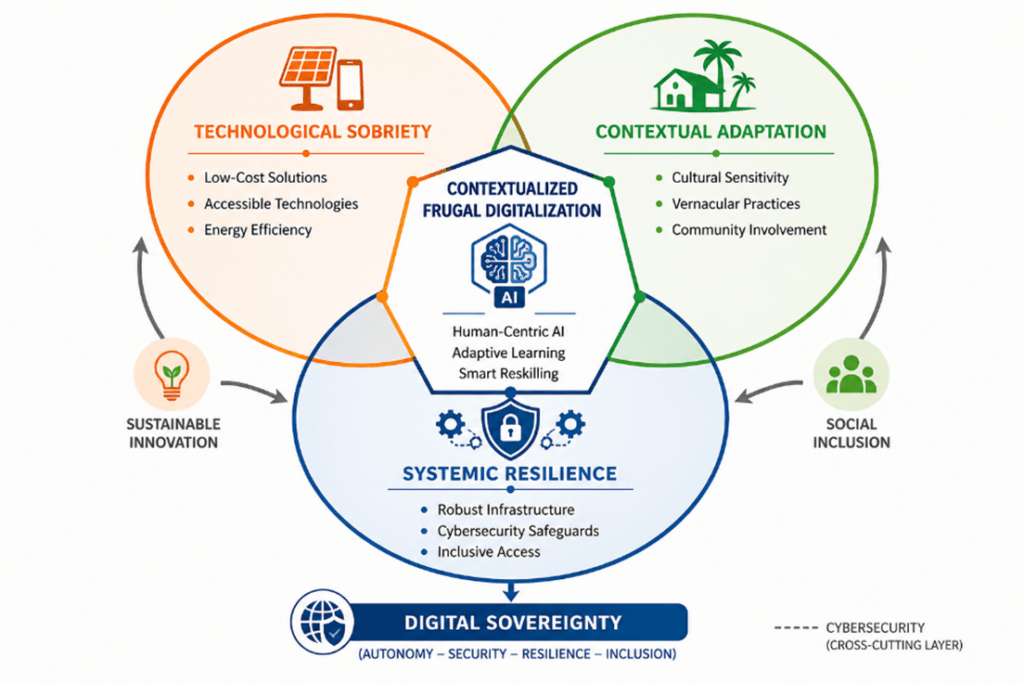
Figure-1: Conceptual model of frugal digital transformation
Key Observations
The analysis yields three core insights that structure the proposed framework:
- Digital transformation without contextual integration leads to systemic inefficiency, as imported technological models fail to align with local socio-economic, institutional, and infrastructural conditions, often generating dependency and limited long-term impact.
- Human-centered artificial intelligence significantly enhances system performance, particularly when deployed as an augmentative layer supporting learning, decision-making, and productivity, rather than replacing human functions. This approach improves adaptability while preserving socio-economic stability.
- Locally grounded innovation ecosystems are essential for long-term sustainability, as they reduce technological dependency, strengthen institutional capacity, and foster adaptive, context-responsive solutions aligned with national priorities and digital sovereignty objectives.
CONCLUSIONS
This paper has demonstrated that digital transformation in Algeria cannot be reduced to the deployment of technological tools, but must be approached as a systemic, strategic, and sovereignty-oriented process rooted in local realities. Current trajectories, largely characterized by technology-driven adoption, remain insufficient to address structural challenges related to education systems, labor markets, and the governance of digital infrastructures.
In response, the concept of contextualized frugal digitalization has been developed as an integrative framework combining technological sobriety, contextual adaptation, and systemic resilience. This approach provides a coherent basis for rethinking digital transformation beyond efficiency-driven logics, toward a model that prioritizes inclusivity, sustainability, and strategic autonomy. In the Algerian context, where digital expansion is accelerating through initiatives such as next-generation infrastructure deployment and regulatory reforms in data governance, this framework offers a pathway for aligning technological innovation with national development priorities.
Artificial intelligence, when positioned as an augmentative infrastructure, plays a central role in enabling this transition. Its capacity to enhance human capabilities across educational and professional domains constitutes a critical lever for addressing skill gaps, improving institutional performance, and supporting adaptive learning and production systems. However, this potential can only be realized under robust governance conditions, including data sovereignty, ethical oversight, and integrated cybersecurity frameworks, which together ensure trust, accountability, and long-term system stability.
Ultimately, achieving sustainable digital sovereignty in Algeria requires coordinated and multi-scalar action across institutional, educational, technological, and economic domains. It entails a transition from passive technology adoption toward active model construction, grounded in local knowledge, regulatory capacity, and infrastructural control. In this perspective, digital transformation is not merely a process of modernization, but a strategic reconfiguration of how technological systems are designed, governed, and embedded within society.
REFERENCES
[1] Autor, D. H. (2015). Why are there still so many jobs? The history and future of workplace automation. Journal of Economic Perspectives, 29(3), 3–30.
[2] Brynjolfsson, E., & McAfee, A. (2014). The second machine age. W. W. Norton & Company.
[3] UNESCO. (2021). AI and education: Guidance for policy-makers. UNESCO Publishing.
[4] World Bank. (2019). The future of work in Africa. World Bank Group.
[5] Minke, G. (2012). Building with earth: Design and technology of a sustainable architecture. Birkhäuser.
[6] Ghechir, S. (2025). Digital sovereignty and cybersecurity: Legal and strategic implications for Algeria. Herodotus Journal of Human and Social Sciences, 9(5), 361–370.
[7] Diafi, A., & Sabeg, N. (2025). Digital transformation in Algeria: Paths and transformations. ZAOULI Journal, 9(11), 86–122.
[8] Nocetti, J., Rouabhi, A., Baazobandi, S., & Berger, C. (2024). Digital sovereignty in the MENA region: Overcoming paradoxes to ensure digital resilience. European Institute of the Mediterranean.
[9] Sour, L. (2025). Hybrid power dynamics in the Maghreb: Cyber politics and narrative competition in the Algeria–Morocco rivalry. Defence Science Review, 21.
[10] Republic of Algeria. (2018). Law No. 18-07 relating to the protection of natural persons in the processing of personal data.