NOUI Abderrahmane1, GUESBAYA Zineb2
1 Center for Scientific and Technical Research on Arid Regions, CRSTRA, BP 1640, Biskra, Algeria
2 Department of Agricultural Sciences, University of Biskra, Algeria
Abstract:
This work investigates the role of Artificial Intelligence (AI) as a catalyst for scientific innovation and sustainable environmental management, using groundwater governance in Algeria as a central case study. It showcases the Infonappe Algeria platform as a concrete demonstration of how AI can support real-time monitoring and long-term stewardship of groundwater in arid zones. Anchored in digital transformation and interdisciplinary research, the study illustrates how the integration of AI with geoscience and hydroinformatics contributes to achieving Sustainable Development Goal 6 (clean water and sanitation). The platform combines geophysical, hydrogeological, and climatic datasets and applies advanced machine learning models—specifically Random Forest and Artificial Neural Networks—to simulate groundwater dynamics and assess vulnerability to pollution and overuse. The findings show that the system improves early warning capabilities, produces continuous groundwater mapping, and strengthens decision-making processes for water authorities in the Biskra region. The project’s international recognition at the 2025 WSIS Forum in Geneva further demonstrates the tangible value of AI-driven tools for sustainability in dryland environments. Overall, this study presents one of the first large-scale applications of AI to groundwater management in Algeria and provides a transferable framework for other regions facing similar water-scarcity challenges.
The study also presents a pilot implementation in the Biskra region, where machine learning models achieved prediction errors below 0.5 m for groundwater levels and classification performance exceeding an F1-score of 0.8 for water-quality assessment.
Introduction
Over the last two decades, Artificial Intelligence (AI) has evolved from a niche technological concept into a transformative force reshaping scientific research, technological innovation, and decision-making processes worldwide (UNESCO, 2021). Advances in computational power, the development of sophisticated machine learning algorithms, and the rapid expansion of large-scale datasets have significantly enhanced the ability of researchers to analyze complex systems, identify hidden patterns, and generate predictive insights across a wide range of disciplines (Krause et al., 2023). As a result, AI has become an essential tool for addressing global challenges related to sustainability, climate change, natural resource management, and socio-economic development.
In highly industrialized countries, AI has become a strategic pillar of economic competitiveness and long-term innovation policy, driving progress in sectors such as healthcare, energy systems, transportation, and environmental monitoring (NAIIO, 2023). At the same time, emerging economies and developing countries increasingly recognize AI as a powerful opportunity to leapfrog conventional technological trajectories and accelerate progress toward the Sustainable Development Goals (SDGs). In Africa in particular, AI-driven approaches are being explored to strengthen governance mechanisms, optimize resource management, and enhance resilience in critical sectors including water security, agriculture, public health, and climate adaptation (World Bank, 2023).
Among these challenges, water resource management represents one of the most pressing issues for arid and semi-arid regions. Groundwater plays a fundamental role in ensuring water supply for drinking, irrigation, and economic development, particularly in regions where surface water resources are limited or highly variable. However, increasing demographic pressure, agricultural intensification, climate variability, and inadequate monitoring systems have contributed to significant stress on aquifer systems in many parts of the world.
In Algeria, groundwater constitutes a strategic resource that supports a large proportion of national water demand, especially in arid regions such as the Sahara and the southeastern agricultural basins. Yet these aquifers are increasingly threatened by overexploitation, declining piezometric levels, and water-quality degradation. Addressing these challenges requires innovative monitoring and management approaches capable of integrating large volumes of heterogeneous environmental data and transforming them into actionable information for decision-makers.
In this context, the integration of Artificial Intelligence with hydrogeology, geophysics, and geospatial technologies offers new opportunities to improve groundwater monitoring, prediction, and governance. AI-based models can process large environmental datasets, identify complex relationships between climatic and hydrological variables, and generate predictive insights that support early-warning systems and sustainable resource management.
Building on the expertise developed at the Scientific and Technical Research Center on Arid Regions (CRSTRA) in Biskra, this study explores the potential of AI-driven approaches for groundwater management in Algeria. It presents the Infonappe Algeria initiative as a practical case study demonstrating how the integration of geophysical, hydrogeological, climatic, and geospatial data with machine learning techniques can support real-time monitoring, risk prediction, and decision-making for sustainable groundwater governance.
Artificial Intelligence: Emerging Opportunities
Artificial Intelligence (AI) is now driving profound transformations across scientific and societal sectors, reshaping practices and accelerating innovation. In healthcare, AI enhances the full spectrum of medical care: sophisticated image-analysis systems identify malignant anomalies earlier than human specialists, predictive analytics refine cardiovascular risk assessment, and computational models drastically shorten drug-development cycles by streamlining molecule discovery (Topol, 2019; Khera et al., 2021). In education and the social sciences, AI facilitates adaptive learning environments tailored to students’ needs while enabling large-scale analysis of demographic, migratory, and behavioral datasets, offering deeper insights into societal dynamics (UNESCO, 2023; Mannino et al., 2021). In engineering, industrial systems, and energy, AI supports advanced product design and predictive maintenance, while smart-grid technologies use machine learning to equilibrate supply and demand and integrate renewable energy sources more efficiently (Zhang et al., 2017; Mohandes et al., 2020). Agriculture and environmental sciences also benefit from AI-driven tools: precision-farming systems informed by sensors and satellite imagery optimize irrigation, detect crop stress, and guide sustainable practices, whereas environmental monitoring applications improve drought prediction, water-quality assessment, and climate-model accuracy (Liakos et al., 2018; Boucher et al., 2020). In the fundamental sciences, AI accelerates theoretical and experimental discovery and expands interdisciplinary research by bridging fields such as geosciences, computer science, and microbiology, enabling new perspectives on complex challenges related to water and environmental systems (Noé et al., 2020).
AI for Water Sustainability: The Infonappe Algeria Case and SDG 6
3.1 Methodological Approach
The Infonappe Algeria system relies on the integration of heterogeneous environmental datasets to improve the monitoring and forecasting of groundwater dynamics in arid regions. The platform combines several types of scientific observations, including geophysical measurements (electrical resistivity surveys), hydrogeological monitoring data (piezometric levels and pumping rates), hydrochemical and microbiological analyses, climatic records, and satellite-derived indicators related to land use and evapotranspiration.
For the pilot implementation in the Biskra region, the database currently includes monitoring information from approximately 120 groundwater wells, hydrochemical analyses from more than 300 water samples, and climatic observations recorded on a monthly basis between 2015 and 2024. Additional spatial information is derived from satellite imagery and regional geological maps.
To ensure data reliability, a quality assurance and quality control (QA/QC) protocol was applied. This includes removal of outliers, verification of measurement consistency, harmonization of units, and spatial validation of well coordinates. Missing values were treated using interpolation methods when necessary.
The analytical workflow relies on several machine learning tasks:
- Prediction: forecasting piezometric level variations using Random Forest regression and Artificial Neural Networks.
- Classification: identifying groundwater vulnerability zones according to hydrochemical indicators such as salinity and nitrate concentration.
- Anomaly detection: detecting abnormal variations in groundwater levels that may indicate overexploitation or contamination events.
- Spatial mapping: producing continuous groundwater distribution maps through integration with Geographic Information Systems (GIS).
The AI models were implemented using Python-based machine learning libraries and trained using historical hydrogeological datasets. The outputs are visualized through an interactive web-based GIS platform that allows real-time consultation by water managers and researchers.
3.2 Results and Discussion
Sustainable Development Goal 6 (SDG 6) calls for universal access to safe water and sustainable sanitation by 2030 a target that poses a major challenge for Algeria, one of the most water-scarce countries in the Mediterranean region. With renewable freshwater resources estimated at less than 600 m³ per inhabitant per year (UN-Water, 2023), and with over 65% of national drinking-water and irrigation needs met by groundwater reserves (MRE, 2021), pressure on aquifers has reached critical levels. This situation is particularly pronounced in the Biskra region, a key agricultural centre where intensified production has led to severe groundwater depletion, marked piezometric declines, and significant degradation of water quality, including increased salinity, nitrate enrichment, and microbial contamination (CRSTRA, 2022). In response to these escalating pressures, the Infonappe Algeria initiative (Noui, 2023) was conceived as a digital, AI-enhanced platform that integrates geophysical, hydrogeological, microbiological, and climatic datasets. Through advanced algorithmic processing, the system produces real-time groundwater maps, forecasts contamination and overexploitation risks, evaluates chemical and microbial water-quality parameters, and generates early-warning indicators to support proactive water-crisis management.
A pilot implementation of the system was conducted for the Biskra aquifer system to evaluate the predictive performance of the machine learning models.
The Random Forest regression model used for predicting groundwater level variations achieved the following performance metrics:
- RMSE (Root Mean Square Error): 0.42 m
- MAE (Mean Absolute Error): 0.31 m
These results indicate a satisfactory capacity of the model to reproduce observed piezometric fluctuations under varying climatic and pumping conditions.
For groundwater quality classification, a neural-network-based model was applied to categorize water samples into three quality classes (good, moderate, degraded) based on salinity and nitrate concentration. The classification performance yielded:
- F1-score: 0.84
- AUC: 0.88
Uncertainty analysis was performed using cross-validation techniques, showing that prediction uncertainty remains below ±0.5 m for groundwater level forecasts in the pilot zone.
These preliminary results confirm that AI-based models can significantly improve groundwater monitoring by identifying early warning signals of aquifer depletion or water-quality degradation.
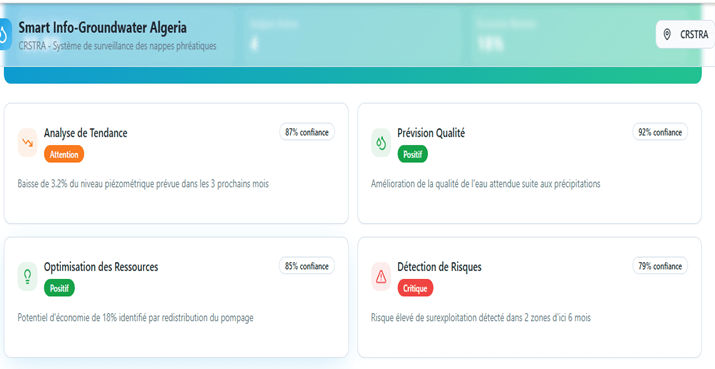
Fig 1: Infonappe Algeria Interface Platform AI
https://preview--algeria-smart-aqua.lovable.app/
Figure 2 presents the conceptual architecture of the Infonappe Algeria system, illustrating the workflow from multi-source environmental data acquisition (geophysics, hydrogeology, microbiology, climate records, and satellite observations) to data preprocessing and machine-learning analysis using Random Forest and Artificial Neural Networks. The resulting outputs are integrated within a GIS-based platform to generate groundwater maps, risk assessments, and early-warning indicators for water-resource governance.
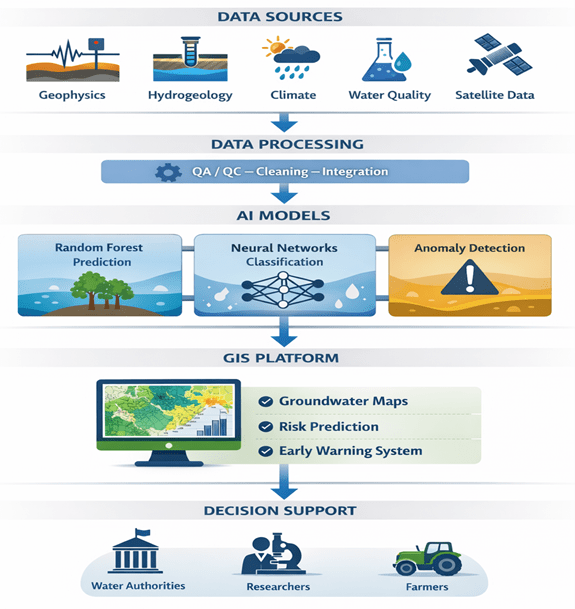
Fig 2: Architecture of the Infonappe Algeria AI system
Challenges and Limitations
Despite its transformative potential, the deployment of artificial intelligence (AI) continues to be hindered by several structural obstacles. Chief among these are the scarcity and uneven quality of available datasets, the substantial financial requirements for digital infrastructure, and persistent ethical concerns related to data protection, algorithmic transparency, and responsibility in cases of malfunction or erroneous output. In many developing nations—including those of North Africa the institutional integration of AI remains limited, weakened by fragmented governance structures, shortages in specialized expertise, and the absence of coherent national strategies for research and innovation. Addressing these barriers calls for a comprehensive policy framework that prioritizes investment in human capital, strengthens digital capacity, and fosters synergies between governmental bodies, private-sector actors, and academic institutions. Only through such coordinated and long-term engagement can AI effectively support progress toward the Sustainable Development Goals, with particular relevance to SDG 6 on clean water and sanitation.
Conclusion
Artificial Intelligence (AI) is emerging as a powerful engine for scientific acceleration and systemic transformation across diverse domains. The Infonappe Algeria initiative illustrates how AI can move beyond conceptual promise to deliver concrete advances in sustainable groundwater management, directly supporting the attainment of Sustainable Development Goal 6 (Clean Water and Sanitation). For Algeria, embedding AI within water-governance frameworks offers a strategic opportunity to reinforce hydrological resilience, optimize resource allocation, and foster a more inclusive model of sustainable development. Through data-driven analysis, digital innovation, and interdisciplinary integration, AI can enhance the nation’s ability to navigate climate-induced stresses, safeguard essential groundwater reserves, and secure long-term, equitable access to water for future generations.
Conflict of Interest
The authors declare that they have no conflict of interest related to this work.
AI Statement
AI-based language tools were used solely to improve grammar, spelling, and style. All scientific content, explanations, analyses, and conclusions are entirely the work of the authors and were not generated by artificial intelligence.
References
[1] Boucher, O., Haustein, K., & Bellouin, N. (2020). Using machine learning to assess climate model uncertainty. Nature Climate Change, 10, 1076–1084.
[2] CRSTRA (Centre de Recherche Scientifique et Technique sur les Régions Arides). (2022). Rapport annuel sur la gestion et la surveillance des ressources en eau dans la région de Biskra. Biskra: CRSTRA.
[3] Guesbaya, Z., Mebrek, N., & Noui, A. (2024). Contribution à la cartographie du rabattement des eaux souterraines de la région de Biskra par deux méthodes (la géophysique et le SIG). Mémoire de master en sciences agronomiques, Université de Biskra.
[4] Khera, R., Haimovich, J., Hurley, N. C., McNamara, R., Spertus, J. A., Desai, N., & Krumholz, H. M. (2021). Use of machine learning models to predict death after acute myocardial infarction. JAMA Cardiology, 6(6), 633–641.
[5] Krause, J., Perrault, R., & Brynjolfsson, E. (2023). Artificial intelligence and the future of science. Science, 380(6652), 107–112.
[6] Liakos, K. G., Busato, P., Moshou, D., Pearson, S., & Bochtis, D. (2018). Machine learning in agriculture: A review. Sensors, 18(8), 2674.
[7] Mannino, M., & Burbach, M. E. (2021). Artificial intelligence and big data in the social sciences: Opportunities and challenges. Social Science Computer Review, 39(5), 831–848.
[8] Mebrek, N., Noui, A., Guesbaya, Z., Kameli, M., & Hadji, R. (2025). Assessing groundwater depletion in the Biskra region (Algeria) using electrical survey techniques and GIS. Algerian Journal of Arid Regions, 18(1), 31–40.
[9] Ministère des Ressources en Eau et de la Sécurité Hydrique (MRE). (2021). Rapport national sur l’état des ressources en eau en Algérie. Alger: MRE.
[10] Mohandes, N., & Rehman, S. (2020). Applications of artificial intelligence techniques in smart grids. Renewable and Sustainable Energy Reviews, 133, 110222.
[11] National Artificial Intelligence Initiative Office (NAIIO). (2023). The National Artificial Intelligence Research and Development Strategic Plan 2023 Update. Washington, DC: U.S. Government.
[12] Noé, F., Tkatchenko, A., Müller, K.-R., & Clementi, C. (2020). Machine learning for molecular simulation. Nature Reviews Physics, 2, 697–713.
[13] Noui, A. (2025, May). Contribution of Artificial Intelligence, Geophysics, GIS, and ICT to the fight against groundwater drawdown in the Algerian, Arab, and African arid regions. United Nations Department of Economic and Social Affairs – Sustainable Development.
[14] Noui, A. (2025, September). Détection intelligente des nappes. Retrieved from https://hydrosond-ai-applica-8hzz.bolt.host/
[15] Noui, A. (2025, September). Info-Groundwater Biskra AI. Retrieved from https://preview–biskra-water-watch.lovable.app/
[16] Noui, A. (2025, October). Info-Groundwater Algeria AI. Retrieved from https://preview–algeria-smart-aqua.lovable.app/
[17] Noui, A. (2025). How AI, Geophysics, GIS, and ICT Help Combat Groundwater Loss in Dry Areas of Algeria, the Arab World, and Africa. The Water Diplomat, 5(10), 1–5.
[18] Noui, A., & Guesbaya, Z. (2022). Modélisation numérique de l’équilibre hydrogéologique – application à la nappe mio-pliocène de Biskra. Communication Science et Technologie, 20(2), 57–62.
[19] Noui, A., & Guesbaya, Z. (2025). Diagnóstico experimental do problema de rebaixamento das águas subterrâneas na região de Biskra (Argélia). Ciência e Tecnologia para o Desenvolvimento Ambiental, Cultural e Socioeconômico, 6, 46–59. https://doi.org/10.37572/EdArt_2905255125
[20] UNESCO. (2021). Recommendation on the ethics of artificial intelligence. Paris: UNESCO.
[21] United Nations Water (UN-Water). (2023). Sustainable Development Goal 6: Synthesis report 2023 on water and sanitation. Geneva: United Nations.
[22] World Bank. (2023). AI for development: Opportunities and challenges for Africa. Washington, DC: The World Bank.